Volleyball Tip
Volleyball Positions Every Parent Should Know
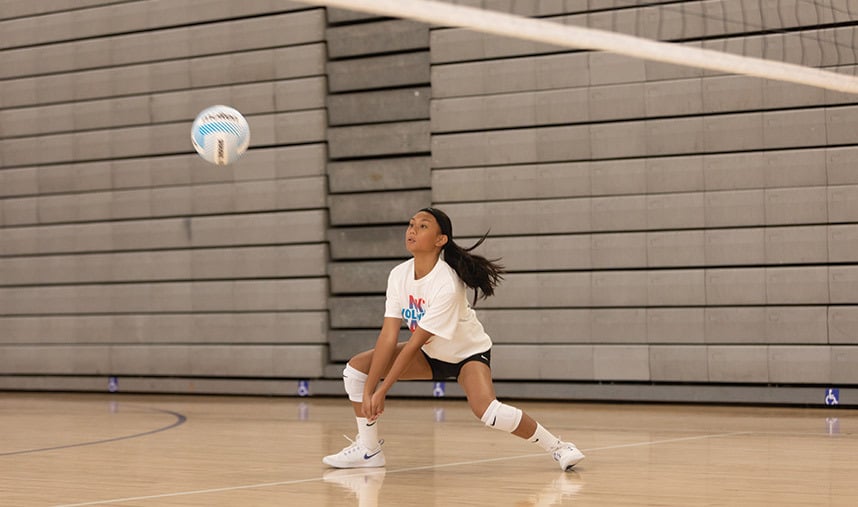
Volleyball moves fast—and when you’re new to the sport, it can feel like everyone is everywhere at once. Here’s the quick win: there are six main volleyball positions, and each one has a specific job. When you know the roles (setter, hitters, middle, libero, defensive specialist), it’s easier to follow the game—and easier to support your athlete’s growth and confidence.
What are the 6 Volleyball Positions?
Indoor volleyball typically features these roles on the court:
- Setter (S)
- Outside Hitter / Left Side (OH)
- Opposite Hitter / Right Side (OPP)
- Middle Blocker / Middle Hitter (MB)
- Libero (L)
- Defensive Specialist (DS)
Outside Hitter (Left Side): The Go-To Attacker
The outside hitter (also called the left-side hitter) is often the focal point of the offense and takes a high volume of swings.
What They Do (on offense):
- Attack from the left side and sometimes from the back row depending on the play.
What They Do (on defense):
- Receive serve, pass, and contribute to blocking at the net.
Coach’s Perspective:
Outside hitters are trusted when the play breaks down—because they can impact every phase (passing, defense, attacking).
Parent Tip:
If your athlete loves being “in the action,” this is one of the most involved roles on the court.
Opposite Hitter (Right Side): The Versatile Weapon
The opposite hitter (also called the right-side hitter) is a high-impact role that can contribute on both offense and defense.
What They Do:
- Attack from the right side (front row) and can also contribute as a back-row attacker depending on the team system.
- Help block with the middle blocker—often against the opponent’s outside hitter.
Parent Tip:
This role rewards athletes who stay calm, read the game, and can do a little bit of everything.
Middle Blocker / Middle Hitter: The Net Defender (and Quick Attacker)
The middle blocker is the core of the team’s net defense and often helps “close” blocks with the outside and opposite hitters.
What They Do (on defense):
- Cover the center of the net and try to block attacks.
What They Do (on offense):
- Read the play and attack quick sets in the middle; they can also act as a decoy to pull blockers and open space for teammates.
Parent Tip:
Yes, many middles are tall—but timing, footwork, and fast reads are what separate good middles from great ones.
Setter: The Playmaker Who Runs the Offense
The setter is the “traffic controller” of the offense—typically taking the second touch and delivering hittable balls to attackers.
What They Do:
- Set to hitters (outside, opposite, middle) and make quick decisions under pressure.
- Read the opponent’s defense and choose the best attack option.
- Contribute across the court: serve receive, defense, and sometimes blocking depending on rotation and level.
Parent Tip:
Setters don’t win with size—they win with poise, precision, and leadership.
Libero: The Defensive Specialist (Different Jersey, Big Impact)
The libero is a defense-first player who plays in the back row, is often in a different colored jersey, and is built to stabilize passing and digging.
What They Do:
- Handle serve receive and digs—turning tough balls into controlled passes for the setter.
- Sub in and out frequently without counting like standard substitutions (rules vary by level/competition).
Important Rule Basics (why they stay back):
- Liberos play the back row and generally cannot block, and attacking is restricted by rule context.
Parent Tip:
If your athlete is quick, fearless, and loves the grind of defense—this role can be a perfect spotlight for their strengths.
Defensive Specialist (DS): Back-Row Support
A defensive specialist focuses on defense and typically substitutes into the back row to strengthen passing, digging, and ball control.
What They Do:
- Come in for a player who may not be as strong in the back row.
- Unlike a libero, a DS generally uses regular substitution procedures (often involving the referee, depending on the level).
Parent Tip:
DS is a great development role—especially for athletes who want to earn court time through consistency and toughness.
Positions vs. Rotations (Why Players “Move Around”)
One of the most confusing parts of volleyball for new families: players rotate, but their role often stays the same. Many systems rotate athletes through court zones after a side-out, while still maintaining their position responsibilities during the rally.
Simple Rule of Thumb:
- Front Row players can attack and block at the net.
- Back Row players focus on defense and serve receive, and attacking/blocking rules change based on where they are relative to the attack line.
How Coaches Choose Volleyball Positions (Especially for Beginners)
Coaches typically place athletes based on a blend of:
- Ball control (passing/setting consistency)
- Athletic traits (speed, coordination, reaction time)
- Confidence and coachability (how well they respond, adjust, communicate)
- Team needs (building a balanced lineup)
The big parent takeaway: Early on, versatility matters. Many athletes try multiple roles before finding their best fit—and that’s a good thing.
Volleyball Position FAQs
What is the best volleyball position for beginners?
Many beginners start in roles that build strong all-around fundamentals—especially passing and defense—because those skills transfer to every position as athletes develop.
What does a setter do in volleyball?
The setter typically takes the second contact and sets the ball to attackers, making quick decisions that shape the offense.
What does a libero do in volleyball?
The libero is a back-row defensive specialist who focuses on passing and digging and is commonly identified by a different colored jersey.
What’s the difference between a libero and a defensive specialist?
Both focus on defense, but the libero is a specialized role with unique substitution rules and back-row restrictions, while a DS typically uses standard substitutions depending on the competition rules.
Can my child change positions as they get older?
Yes—many athletes change positions as their skills, confidence, and physical development evolve. Early versatility is common and often encouraged.
Ready to Help Your Athlete Level Up?
Understanding positions is a great start—now it’s time to build the skills that match your athlete’s strengths. Explore Nike Volleyball Camps designed for all ages and levels, with coaching that helps athletes grow their game and build real confidence. It starts here.
Explore Volleyball Camps: https://www.ussportscamps.com/volleyball
Ready to learn more about Volleyball? We have you covered.
- Volleyball Terms Every Parent Should Know
- How to Choose a Summer Volleyball Camp for Your Child
- How to Improve Your Vertical Jump in Volleyball