Basketball Tip
Are Sports Camps More Fun Than Regular Practice? What the Research Says
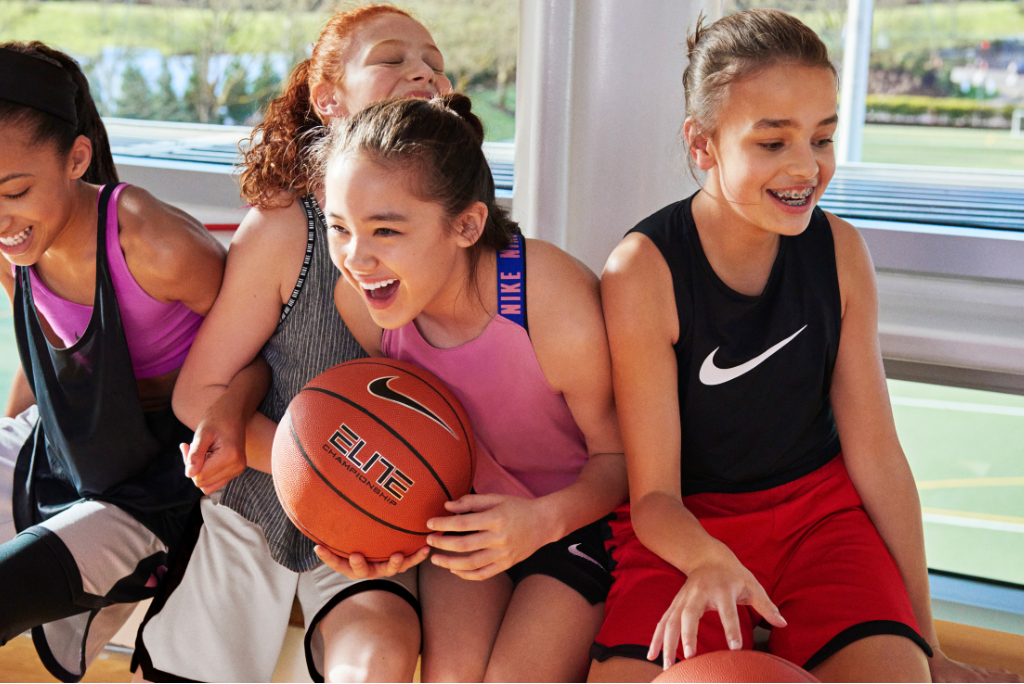
Yes, sports camps are more fun than regular practice for most young athletes, and that difference is a measurable outcome with real implications for how athletes develop, how long they stay in sport, and how much they ultimately get out of it. Understanding why camp feels different from practice, and why that difference matters, is one of the most useful things a parent or coach can know.
Why Fun Is Not a Soft Goal in Youth Sports
Fun is the number one reason young athletes participate in sport, ranking ahead of competition, college scholarships, and fitness.
Aspen Institute's Project Play, which tracks youth sport participation across the United States, consistently finds that when athletes are asked why they play, "it's fun" ranks first across age groups, genders, and sports. When athletes are asked why they quit, the answers cluster around the same theme from the opposite direction: it stopped being fun, there was too much pressure, or it felt more like work than play.
The practical implication: fun is a precondition for development. Athletes who enjoy their sport practice more, persist through difficulty longer, seek out additional skill development voluntarily, and remain in sport through the years when retention becomes hardest. Fun is the mechanism that drives all of it.
What Makes Camp Structurally Different from Regular Practice
Regular practice, whether at the club or school level, is built around preparation and evaluation. Coaches are preparing athletes for competition. They're evaluating who is ready, who is improving, and who might earn more playing time. Even in the most positive coaching environments, athletes know they are being assessed. That awareness changes how they play.
Camp removes the evaluation layer entirely. There is no roster spot to protect. There is no playing-time calculus. There is no coach whose opinion of the athlete carries over into the next game. What replaces it is something simpler and, for development purposes, more valuable: the freedom to try things, fail at them, try again, and receive coaching without consequence.
Sports psychologists describe this difference in terms of motivational climate. Practice environments that emphasize performance, comparison, and selection create what researchers call an "ego-involving" climate, where athletes define success as being better than others. Camp environments that emphasize effort, learning, and improvement create a "mastery climate," where athletes define success as getting better than they were yesterday. Decades of research, beginning with Carol Ames' foundational 1992 work on achievement goal theory, consistently shows that mastery climates produce better skill acquisition, more persistence, and higher intrinsic motivation than ego-involving climates.
Camp creates a fundamentally different motivational environment rather than simply adding fun on top of practice.
The Science of Intrinsic Motivation and Sport Retention
Why does this matter for long-term development? Because intrinsic motivation, the internal drive to participate in an activity for its own enjoyment rather than for external rewards or to avoid punishment, is the strongest predictor of long-term sport participation that researchers have identified.
Self-determination theory, developed by psychologists Edward Deci and Richard Ryan, identifies three core psychological needs that, when met, produce intrinsic motivation: autonomy (the sense that your behavior is self-chosen), competence (the sense that you are growing and effective), and relatedness (the sense of connection with others in the activity). When these needs are met, athletes don't need to be pushed to practice. They want to.
Camp is specifically structured to meet all three. Athletes choose their own goals for the week (autonomy). They receive concentrated skill instruction that produces visible improvement (competence). They train and compete alongside peers in a community environment (relatedness). Regular practice, particularly in high-stakes competitive programs, frequently undermines all three: athletes follow assigned roles, improvement is evaluated against external standards, and competition creates social comparison rather than connection.
The Fun-Skill Connection: Why Enjoyment Accelerates Development
The connection between fun and skill development is not just motivational. It's neurological.
Athletes who are anxious or under evaluative pressure activate the brain's threat-response systems, which narrow attention and reduce cognitive flexibility. Athletes who are engaged and enjoying themselves activate the brain's reward and learning systems, which broaden attention, increase creative thinking, and improve memory consolidation. In plain terms: athletes learn better when they're having fun.
This is why athletes often describe camp as the week where something clicked. The relaxed attention, the absence of stakes, and the sheer volume of reps in a positive environment create optimal conditions for skill acquisition. The same athlete who has been stuck on a skill for months in their regular program can make a breakthrough in three days at camp, not because the coaching is necessarily different, but because the psychological conditions for learning are.
Aspen Institute's Project Play notes in its State of Play research that early sport environments characterized by high enjoyment are significantly more likely to produce athletes who continue playing into adolescence and adulthood. Enjoyment is the path development runs on.
The 70% Problem: Why Youth Sports Retention Depends on Fun
Approximately 70% of young athletes quit organized sport by age 13, according to research tracked by Aspen Institute's Project Play. The primary drivers: burnout from early specialization, pressure from competitive environments, and loss of enjoyment.
This is one of the most consequential data points in youth sports development, and it points directly to what camp addresses. The athletes most at risk of leaving sport are the ones in high-pressure, evaluation-heavy environments where fun has been gradually crowded out by the seriousness of competition. Camp, particularly for athletes who have been in year-round competitive programs, restores the conditions that originally made the sport worth playing.
The athletes who persist through youth sport into adolescence and adulthood are disproportionately the ones who maintained their intrinsic motivation. Camp is one of the most effective interventions for rebuilding that motivation when competitive environments have eroded it.
What This Looks Like in Basketball Specifically
In basketball, the difference between a practice environment and a camp environment shows up in specific, observable ways.
In a standard practice, athletes run set plays, work on assigned roles, and are corrected for deviating from the system. Creativity is often punished when it produces turnovers. Risk-taking is discouraged when games are on the line. Athletes learn to play within what they know, which limits the expansion of what they can do.
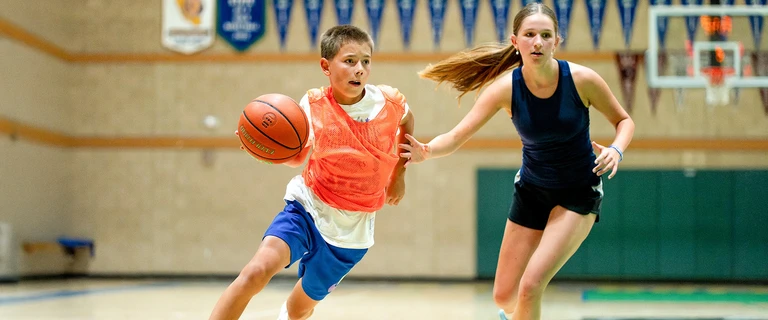
In a basketball camp, athletes are encouraged to try things they've never attempted in a game. A guard who has never run a pick-and-roll from the ball-handler position can try it dozens of times in a session. A post player who wants to extend their range can work on mid-range shooting without a coach pulling them aside to stay in their lane. A defender can experiment with on-ball pressure techniques without worrying about giving up an easy basket in a game that matters.
This experimental freedom, combined with expert coaching that can actually teach the skill rather than just demand the result, produces development that competitive environments cannot replicate. Fun is the container that makes the experimentation possible.
How Coaches and Parents Can Reinforce the Camp Effect
The research on youth sport motivation is consistent on one point: adult behavior is one of the primary determinants of whether a sport environment is intrinsically motivating or not.
Coaches who emphasize effort, improvement, and the process of learning, rather than outcomes and comparison, create environments that look more like camp than like high-stakes competition. Parents who ask open, process-focused questions after camp (how did you play? What did you try? What do you want to work on next?) reinforce the mastery orientation that makes camp gains stick.
The athletes who make the most of camp are the ones whose families and coaches treat the week as a learning environment, not a performance showcase. That framing starts before camp and continues after it.
About Nike Sports Camps, Provided by US Sports Camps
Nike Sports Camps, provided by US Sports Camps, has been built on a simple belief for over 50 years: real development and genuine fun are not a tradeoff. The camps that produce the best athletes are the ones where athletes are having the best time, and that is by design, not coincidence.
Basketball programs are available for athletes of all ages and levels, led by coaches with collegiate and professional experience who are selected for their ability to create exactly the kind of mastery-focused, low-pressure, high-quality environment that the research consistently points to.
Visit ussportscamps.com/basketball to find programs near you. It Starts Here.