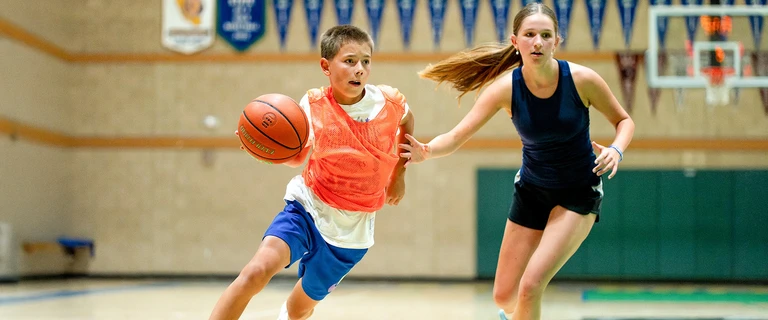
Basketball Tip
What Your Child Will Learn at Basketball Camp
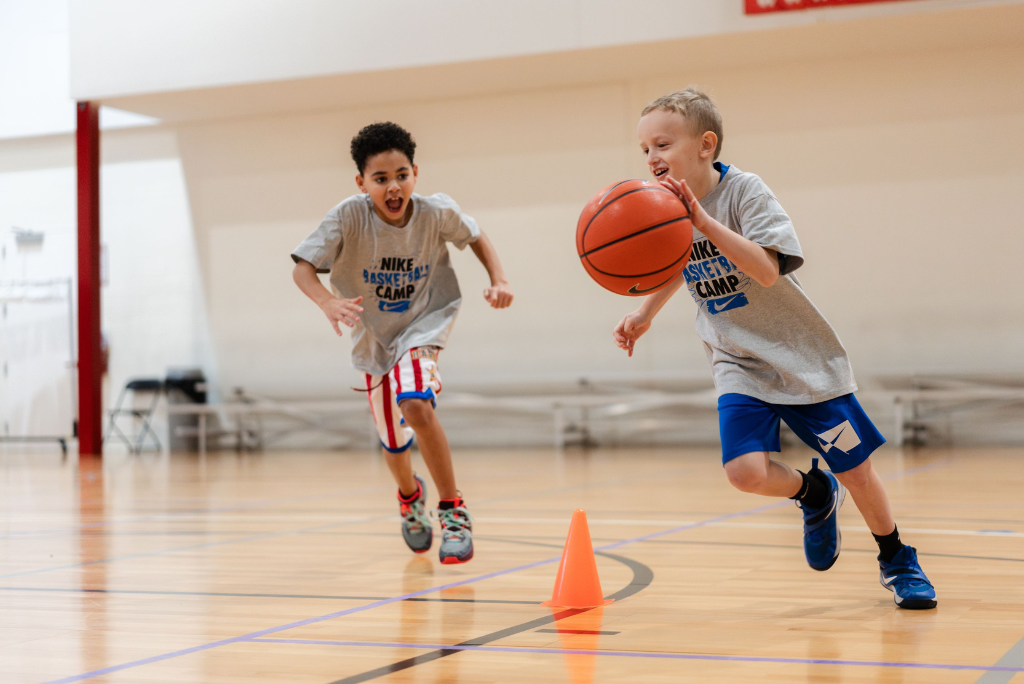
Basketball camp packs more deliberate instruction into a single week than most athletes get in an entire season. But parents who haven't been through it often wonder: what's actually being taught in there? What will my child come home knowing? This guide breaks down the skills, habits, and lessons a well-run basketball camp delivers, so you can set realistic expectations and evaluate programs with confidence.
The Technical Foundation Camp Builds
Every quality basketball camp covers the foundational skills every player needs to grow: ball-handling with both hands, passing mechanics across different distances and situations, shooting form from setup through follow-through, footwork for driving and finishing at the rim, and defensive positioning and stance.
What separates strong programs from average ones is how deeply each skill is coached and how much individual feedback athletes receive. In a group drill, it's easy for a bad habit to go uncorrected for an entire session. In a well-run camp with strong coach-to-athlete ratios, coaches catch those habits early and give athletes the specific feedback they need to fix them before the pattern gets reinforced.
Athletes who arrive with inconsistent mechanics leave camp with enough corrected repetitions to start building the real consistency that practice alone rarely produces.
Ballhandling and Footwork: The Skills That Unlock Everything Else
Coaches consistently identify ballhandling and footwork as the foundational skills that separate developing players from stagnating ones. Camp creates the volume of repetitions that builds these skills: hundreds of dribbling sequences per session, dozens of footwork patterns in live situations, and the competitive pressure of small-sided games that forces athletes to apply what they're learning under realistic conditions.
Athletes who arrive avoiding their weak hand leave camp having used it enough times that it starts to feel less foreign. Athletes who arrive with sloppy pivot footwork leave camp with enough reps on legal pivots that the habit starts to replace the bad one. That kind of mechanical change requires volume, and camp delivers it in a compressed timeline.
The Basketball IQ Layer Most Young Athletes Are Missing
Technical skill gets athletes on the court. Basketball IQ keeps them there as the game gets faster and the competition gets better. Camp is one of the few environments outside a high-level club or school program where young athletes receive genuine coaching on the conceptual side of the game.
What that looks like in practice: how to read a defense before catching the ball, when to drive versus when to kick out, how to set a screen that actually creates space, where to be when you don't have the ball, and how to help-side defense works. Coaches who have played or coached at the collegiate or professional level bring a vocabulary for these concepts that most youth coaches don't have time to develop. Camp is often where young athletes encounter the game the way it works at the next level.
The Confidence Effect
There's a pattern camp coaches describe across every sport, and basketball is no exception: athletes arrive hesitant to attempt skills they haven't fully mastered, and leave willing to try. The low-pressure environment of camp, where mistakes are part of the learning process and no one is losing a roster spot over a turnover, creates a psychological context that competitive games don't.
Research from Aspen Institute's Project Play supports this: athletes who develop in positive, process-focused environments build the intrinsic motivation that sustains long-term sport participation. Camp builds confidence not by telling athletes they're great, but by giving them enough reps in a supportive environment that actual competence grows.
Position-Specific Development
Many basketball camps include position-specific training, particularly for older athletes. Guards work on creating off the dribble, pull-up shooting, and running pick-and-roll actions. Wings work on off-ball movement, catch-and-shoot consistency, and driving from the three-point line. Bigs work on post footwork, finishing through contact, and setting and rolling effectively.
For younger athletes still discovering the game, generalist instruction covering all positions builds the foundation to make those decisions later with real experience behind them. For high school athletes with clear positional identities, position-specific sessions accelerate development in the areas that matter most for their role.
What to Ask Your Child Before and After Camp
Before camp starts, help your athlete identify one or two specific things they want to work on. "What do you want to get better at this week?" is a simple question that gives them something concrete to focus on when the coaching happens.
After camp, ask open-ended, process-focused questions: how did you play? What did you try that felt different? What's one thing you want to keep working on? Questions about process, rather than about scores or whether their team won, reinforce the growth mindset that makes camp improvement last beyond the week.
About Nike Sports Camps, Provided by US Sports Camps
Nike Sports Camps, provided by US Sports Camps, offers basketball programs across the country led by coaches with collegiate and professional experience. Coaches are selected for their ability to teach young athletes effectively and their commitment to athlete development at every level.
For over 50 years, US Sports Camps has helped athletes of all levels grow their game, build confidence, and love sport through safe, fun, and expertly coached programs.
Visit ussportscamps.com/basketball to find programs near you. It Starts Here.