
Flag Football Tip
Best Flag Football Camps: How to Find the Ones With Top Coaches
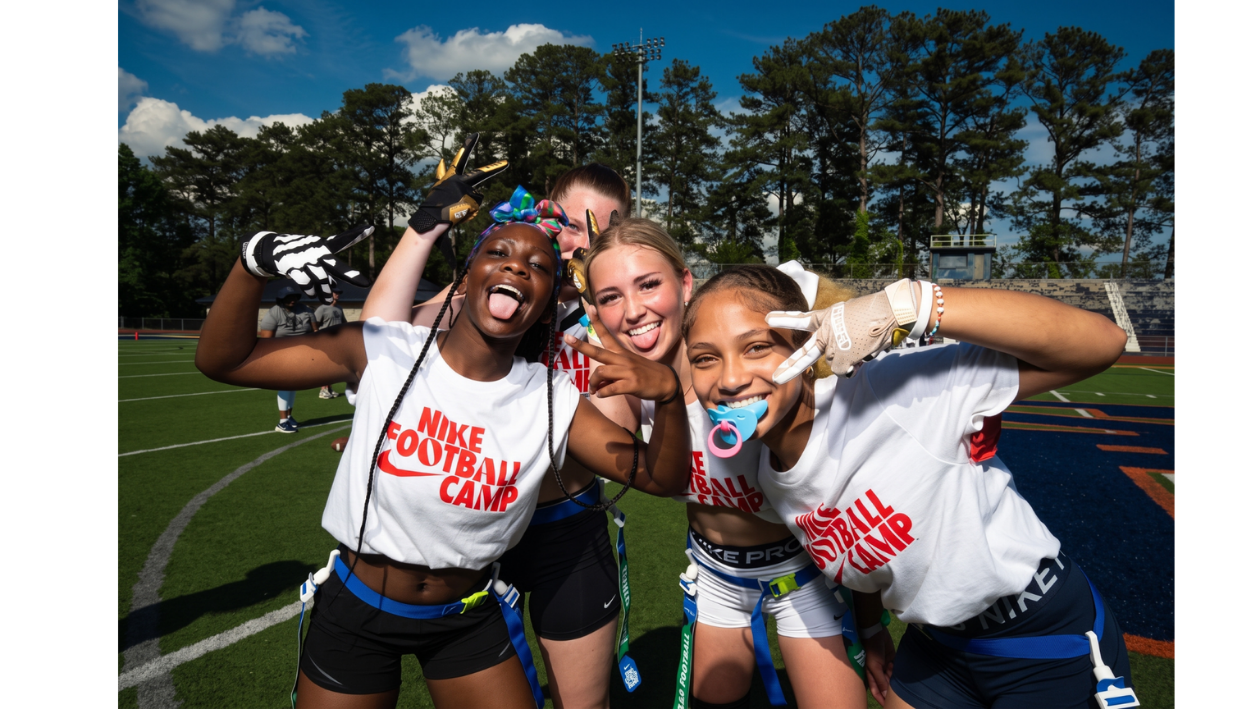
The best flag football camps are the ones with the best coaches, and that is not a slogan. Flag football is a teaching sport. There is no contact to hide behind, so almost everything an athlete gains in a week comes from instruction: how to read a defense, how to run a route that actually gets open, how to pull a flag cleanly instead of grabbing at a jersey. A camp is only as good as the person teaching those things. This guide covers what a top flag football coach looks like, how to evaluate a camp before you register, and what to ask when you call.
The Short Answer
When parents ask which flag football camps have the best coaches, they are usually asking five questions at once. Here is what matters most:
- Coaching background. Look for coaches who have actually played and taught the game at a high level: collegiate coaches, current and former professional athletes, longtime high school and youth coaches who have spent years working with athletes your child's age.
- Teaching ability, not just résumé. Plenty of great players are ordinary teachers. The coach you want is the one who can explain a concept three different ways until it clicks, and who makes athletes want to try it again.
- Staff-to-athlete ratio. Flag football is a skill-dense sport with a lot of individual technique. Fewer athletes per coach means more reps with feedback and less standing in line.
- How the week is structured. A strong camp teaches both sides of the ball, groups athletes by age and ability, and builds toward real game play rather than drilling in isolation for four days.
- Whether athletes are having a good time. This is not a soft criterion. Athletes who enjoy the week come back, keep playing, and keep improving. Fun is part of the development, not a distraction from it.
A camp that answers these questions clearly and specifically is usually a camp worth your money. A camp that answers them vaguely is telling you something too.
Why the Coach Matters More in Flag Than in Almost Any Sport
Flag football moves fast and rewards decisions. In a 5-on-5 or 7-on-7 game, every athlete on the field touches the outcome of nearly every play. There is nowhere to disappear. That is what makes it such a good developmental format, and it is also why coaching quality shows up immediately.
A good flag coach teaches an athlete to see the field: where the space is, when to break off a route, how to pass off a receiver in zone coverage. Those are conceptual skills, and they transfer. Athletes who learn them at camp play smarter in their rec league, their school team, and later in tackle if they choose to play it.
A weaker camp runs the same three drills, splits everyone into teams, and lets the games run themselves. Athletes have fun. They do not get much better. Over a week, the difference between those two experiences is large, and it comes down almost entirely to who is standing on the field with a whistle.
What a Top Flag Football Coach Actually Looks Like
Credentials are one factor among several, and they are not the whole story. Here is what experienced camp directors actually look for, and what you should too.
Real playing and coaching experience. Collegiate coaching at the D1, D2, or D3 level. A professional playing career. Years of running youth or high school programs. Experience is the clearest signal that someone has seen enough athletes to know how to reach yours.
Experience with your athlete's age. Coaching a college receiver and coaching a nine-year-old trying flag for the first time are different jobs. Ask specifically about the age group your child falls into.
Communication. Watch for how a coach talks about athletes, not just about football. The good ones talk about confidence, effort, and progress. They correct without deflating.
A real understanding of both sides of the ball. Flag football camps that only teach offense leave half the game on the table. Defense in flag is technical work: leverage, angles, pursuit, clean flag pulls. Ask whether it gets equal attention.
The ability to make it fun. This is the trait parents underrate and athletes never do. According to research from the Aspen Institute's Project Play, enjoyment is one of the strongest predictors of whether a young athlete keeps playing at all. A coach who makes a hard week feel great is doing something measurable.
How to Evaluate a Flag Football Camp
Rather than a rigid checklist, here is a direction for thinking it through.
The coaching staff. Ask who is leading the camp, who is assisting, and what their backgrounds are. Ask how staff are selected and trained. Specific answers are a good sign.
The ratio. Ask how many athletes each coach is responsible for. This single number tells you more about your athlete's week than almost anything else on the page.
Grouping. Ask how athletes are divided. A well-run camp groups by age and ability so a beginner is not thrown in with athletes who have played for five years, and so an experienced athlete is not bored. Both of those are wasted weeks.
What a day looks like. You are listening for a balance of instruction, live play, and rest. Skills in the morning, competition in the afternoon, and enough water breaks that nobody is cooked by Wednesday.
Safety and transparency. Ask about background checks for staff, medical coverage on site, heat and hydration protocols, and how injuries are handled. Flag is a non-contact format, which removes a lot of risk, but collisions, ankles, and heat are still real. A quality camp answers these questions readily. Transparency here is a stronger signal than any certificate on a wall.
Format and fit. Day camps, half-day camps, extended day, and overnight camps all offer something different. Overnight camps add independence, evening programming, and friendships that day camps cannot replicate. Half-day clinics are often the right call for a first-time athlete. Match the format to your athlete's age, readiness, and what they want out of the week.
What Flag Football Camp Offers That Club and Travel Teams Usually Don't
If your athlete already plays on a club or travel team, a camp is a different environment, and that difference is the point.
At camp there is no roster spot to protect and no playing time to lose. An athlete can try quarterback for the first time, learn a position they have never played, run a route badly, and try it again ten minutes later without any of it costing them. Clubs increasingly run their own camps, and many are good, but the low-pressure setting is what makes a camp week valuable. It is where athletes experiment, and experimenting is where confidence gets built.
That combination, real development and genuine fun, is what separates a week your athlete remembers from a week they endure.
Questions Worth Asking Before You Register
- Who are the coaches, and what is their experience with athletes my child's age?
- What is the staff-to-athlete ratio?
- How are athletes grouped by age and ability?
- Does the camp teach defense as seriously as offense?
- How are staff screened and trained?
- What does a typical day include?
- How do you handle injuries, and who provides medical coverage on site?
- What is included in the fee, and what costs extra?
The way a camp answers is as informative as the answers themselves. Clear, specific, unhurried responses come from organizations that have thought these things through.
And when your athlete gets home, ask them open questions. "How did you play?" tells you far more than "did you win?"
Where Nike Flag Football Camps Fit
Nike Flag Football Camps, provided by US Sports Camps, run across more than a dozen states for athletes ages 5 to 18, in co-ed and girls-only sessions. Formats range from short clinics and half-day camps to full day, extended day, and overnight camps, and athletes are grouped by age and ability so instruction lands where they actually are.
Coaches at US Sports Camps are selected based on experience, communication skills, teaching ability, and alignment with youth development best practices. Many bring collegiate coaching backgrounds at the D1, D2, and D3 levels; others are professional athletes or former Olympians. Each coach brings their own expertise to their camp, guided by best practices developed over five decades. US Sports Camps has run camps since 1975 and now welcomes more than 175,000 athletes each year across 20+ sports.
Pricing varies by sport, location, format, and duration, so the most accurate step is to check current pricing for the specific camp you are considering at ussportscamps.com.
For over 50 years, we've helped athletes of all levels grow their game, build confidence, and love sport through safe, fun, and expertly coached camps. It Starts Here.
Frequently Asked Questions
Which flag football camps have the best coaches?
The camps with the strongest coaching are the ones that recruit from real experience: collegiate coaches, professional athletes, and longtime youth and high school coaches, and that can tell you exactly who is leading your athlete's group. Ask for the coaching staff by name and background before you register. Any camp confident in its staff will share it.
What should I look for in a flag football camp?
Coaching background and teaching ability, staff-to-athlete ratio, how athletes are grouped by age and skill, whether defense gets taught as seriously as offense, the daily schedule, and how the camp handles safety. Fit matters too: the right camp for a competitive 15-year-old is often the wrong one for a curious 8-year-old.
What age should an athlete start flag football camp?
Many camps welcome athletes starting around age 5 or 6, usually in shorter clinic or half-day formats built around fundamentals and fun. Full day and overnight camps generally suit older athletes who are ready for a longer day and more instruction.
Is flag football camp worth it if my athlete already plays on a team?
Often yes, and for a different reason than parents expect. Camp is a low-pressure environment with no roster spot on the line, so athletes can try new positions and new techniques without consequence. Many come back to their team playing looser and thinking faster.
Are there flag football camps for girls?
Yes. Girls flag football is one of the fastest-growing formats in the country, and many camps now run girls-only sessions alongside co-ed ones. Nike Flag Football Camps offer both, so you can pick the setting where your athlete will be most comfortable getting better.
How much does a flag football camp cost?
Prices vary by location, format, and duration, with half-day clinics costing less than overnight camps. Rather than relying on general ranges, check current pricing for the specific camp you are considering at ussportscamps.com.