Tip
How to Stand Out at Sports Camp in a Good Way: Coachability, Effort, Leadership, and Making Friends
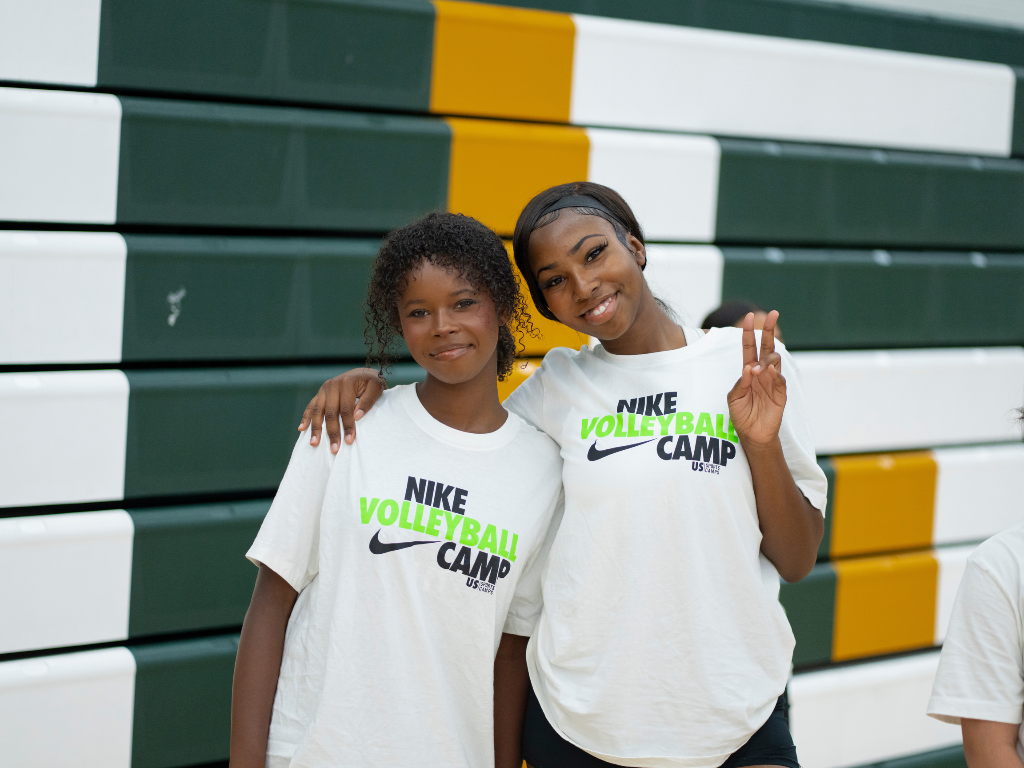
Nike Sports Camps, provided by US Sports Camps
Every athlete at camp wants to be noticed. Most of them have the wrong idea about how.
They think standing out means being the best in the group, or the loudest, or the one who scores the most in the end-of-day game. Ask a camp coach who they remember from last summer and you will hear something different. They remember the athlete who tried the correction on the very next rep. The one who hustled to the back of the line. The one who introduced herself to the quiet athlete on Monday and had a partner for every drill by Tuesday.
This guide is about standing out the way coaches actually notice, and about the part of camp that athletes remember longest: the friends. It is written for you, the athlete. There is a short section for your parents at the end.
The Short Answer
- Coaches notice effort, attention, and how fast you try what they tell you. Talent gets you noticed in the first ten minutes. Coachability gets you noticed all week.
- Listening to coaching at camp is a skill, and it is different from listening to your regular coach, because the coaching comes faster and from more people.
- Leadership at camp is quiet. It looks like encouraging the athlete next to you, not directing them.
- Friendships at camp form through shared work, which is why they form so fast. You can speed it up on day one with three simple moves.
What Do Coaches at Sports Camp Actually Notice?
Camp coaches see a lot of athletes. A coach at a Nike Sports Camp, provided by US Sports Camps, might work with dozens of athletes in a single week, often for the first time. They do not have a season to figure out who you are. So they read the signals that show up fast, and they are not the ones most athletes think.
Effort between the drills. Anyone can go hard when the ball is in their hands. Coaches watch what you do when it is not: whether you jog or walk to the next station, whether you are first in line or hiding at the back, whether you are getting water or getting distracted.
Eye contact when they talk. It sounds small. It is not. A coach explaining a drill to twelve athletes can tell in two seconds who is listening, and those are the athletes who get the extra tip afterward.
Trying the correction immediately. This is the big one. When a coach fixes your footwork and you do it their way on the very next rep, even though it feels awkward, you have just told the coach that their time on you is well spent. Coaches invest in athletes who use what they are given. The athlete who nods and then goes back to the old way has told the coach the opposite.
How you treat the athletes around you. Coaches notice who encourages a partner after a miss and who rolls their eyes. They notice it more than you would guess, and they remember it.
None of this requires being the most talented athlete in the group. All of it is a choice.
How Do I Listen Better to Coaching at Camp?
Listening to coaching at camp is harder than listening to your regular coach, and it helps to understand why.
With your team coach, you have months to learn how they explain things. At camp, you might hear from four or five coaches in one day, each with their own way of saying the same thing, and the instruction comes fast because there is a lot to cover in a week. Athletes who are great listeners at home sometimes struggle at camp simply because the format is different.
Here is how to get better at it.
Listen for the one thing. When a coach gives you feedback, there is almost always one main point inside it. Find it. If a coach says "your elbow is flying out, you are rushing the release, and your feet are not set," the one thing is probably the feet, because fixing the base often fixes the rest. If you are not sure which is the one thing, ask: "If I only fix one of those, which one?"
Repeat it back in your own words. "So you want me to get my feet set before I even think about the shot?" This does two things. It makes sure you understood, and it locks the instruction into your memory far better than nodding does.
Try it immediately, and try it exactly their way. Even if it feels worse. New technique almost always feels worse before it feels better. Give the correction at least ten honest reps before you decide anything about it.
Do not defend the old way. "That's how my coach at home taught me" is a sentence that ends coaching conversations. You can go back to your old way after camp if you want to. For this week, try theirs. You might be surprised.
When coaches disagree, ask. Two coaches may tell you slightly different things about the same skill. That is normal; there is more than one right way to do most things. Ask one of them: "Coach so-and-so told me to do it this way. Which should I focus on this week?" Coaches respect that question. It shows you are listening to everyone.
The Positive Coaching Alliance describes a mastery approach to sport built on effort, learning, and treating mistakes as acceptable (Positive Coaching Alliance, via Jr. NBA). Coachability is what that approach looks like from the athlete's side. You are there to learn, so you treat every correction as a gift instead of a criticism.
How Can I Stand Out at Sports Camp in a Good Way?
The phrase "in a good way" matters. There are athletes who stand out at camp for the wrong reasons: showing off, ignoring instruction, treating drills as a chance to beat the athlete next to them rather than to learn. Coaches notice those athletes too. It is not the kind of noticing you want.
Standing out in a good way is simpler and much more within your control.
Be first. First in line for a drill. First to volunteer when a coach asks for a demonstration partner. First to start the next rep after a water break. It costs nothing and coaches see it instantly.
Be consistent. Anyone can have one great session. Coaches are far more impressed by the athlete whose effort on Thursday afternoon looks exactly like their effort on Monday morning. The middle of camp week is where most athletes fade. Continue to try your best throughout the week.
Get better at something visible. Pick one skill at the start of the week and attack it. By Friday, a coach who saw you struggle with it on Monday will notice. Visible improvement is the most memorable thing an athlete can do at camp, and it has nothing to do with where you started.
Make the athletes around you better. Encourage your partner. Shag balls for someone who is working on a skill. Tell the quiet athlete in your group they did something well. Coaches notice athletes who lift the group, because that is a rare and valuable thing and they know it.
Research on what young athletes themselves say makes sport fun ranks "trying hard" and "positive team dynamics" near the top of 81 factors, far above winning (Visek et al., Journal of Physical Activity and Health). Coaches know this. The athlete who brings effort and lifts the group is making camp better for everyone, and that is exactly the kind of standing out that gets remembered.
How Can I Show Effort and Leadership at Camp?
Leadership at camp is not about being in charge. You are not the captain. There is no captain. Leadership at camp is a set of small behaviors that make the group work better, and coaches can spot them from across the field.
Leadership is showing up ready. Gear on, water bottle filled, at the station before the coach gets there. The athlete who is ready makes the whole group start faster.
Leadership is encouragement. "Good try, you almost had it." "Nice, that was way better than last time." Said to an athlete you met two days ago. This is the most powerful leadership behavior at camp and it is available to every athlete regardless of skill level.
Leadership is not being the loudest. Some of the best leaders at camp barely raise their voice. They lead by being the athlete everyone else wants to be partnered with. If you are naturally quiet, you do not have to change that. You just have to be reliable, encouraging, and consistent, and the group will notice.
Effort is the foundation underneath all of it. The Aspen Institute's Project Play has spent years documenting what keeps young athletes in sport, and a recurring theme is that the athletes who last are the ones who learn to find satisfaction in effort and improvement, not only in results. Camp is the best place there is to practice that, because for one week, nobody is keeping standings.
How Can I Make Friends Quickly at Sports Camp?
Here is a secret about camp friendships: they are easier to make than friendships anywhere else, and the reason is the structure.
Everyone arrived alone or nearly alone. Everyone is a little nervous. And the whole week is built around doing hard things in pairs and small groups, which is the fastest friendship-building machine ever invented. You will spend more focused time with your drill partner on Monday than you spend with most classmates in a month.
So the question is not really how to make friends at camp. It is how to make them on day one instead of day three. Here are three moves.
Introduce yourself before the first drill starts. Turn to the athlete next to you in the first session, say your name and where you are from, and ask where they play. That is the whole move. You now have a default partner for every pairs drill that morning, and the hardest part of making a friend, the first sentence, is done before the coach blows the whistle.
Sit with someone new at lunch. Not the athletes you already know from home. Someone from your drill group. Ask them how their morning went. Camp lunches are where drill partners become actual friends.
Say one encouraging thing to someone every session. "That was a great pass." "You got it that time." Athletes gravitate toward people who make them feel good about how they are doing. By Wednesday, you will be the athlete everyone wants in their group.
One more thing. If you are the athlete who came with a friend from home, make a point of including the athletes who did not. It is the kindest thing you can do at camp, and it is also, not by coincidence, one of the fastest ways to stand out to coaches.
Do Sports Camps Help You Make Friends?
Yes, and it is one of the most reliable things a camp week does.
Think about why. Friendship in general forms through proximity, repetition, shared challenge, and a reason to talk. Camp delivers all four at once, for days in a row. You are physically near the same athletes all day. You do hard things together, repeatedly. And every drill gives you a built-in reason to communicate. Young athletes rank positive team dynamics at the very top of what makes sport fun (Visek et al.), and a camp week is essentially a crash course in building them.
There is a practical benefit too. Athletes who make a friend early at camp have better weeks: they push harder in drills because someone is watching, they recover from rough sessions faster because someone says "me too," and they are more likely to want to come back. Coaches at Nike Sports Camps, provided by US Sports Camps, have watched this happen for decades. The athletes who come back summer after summer very often come back for the people as much as the sport.
A Note for Parents
If you are reading this with your athlete, here is the short version of how to help.
Before camp, talk about effort and coachability as the goals, not performance. "Try everything the coaches tell you" is better advice than "show them what you can do."
During camp, when you talk to your athlete, ask about people before you ask about skills. "Who did you partner with today?" opens a better conversation than "How did you do?"
After camp, notice the behaviors, not just the skills. If your athlete comes home hustling between drills at their regular practice, or encouraging teammates more, that is camp working. Say so.
Camp works best when athletes are there to learn and connect rather than to prove something. The athletes who stand out for the right reasons are almost always the ones whose parents framed the week that way.
Frequently Asked Questions
What if I am shy?
Shyness is not a problem at camp, because the structure does most of the work. You do not have to walk up to a group and start a conversation. You just have to say hello to the athlete next to you in a drill, which is much easier. Many of the best-liked athletes at camp are quiet ones who are reliable partners and generous with encouragement.
What if I am not as good as the other athletes in my group?
Then you are in exactly the right place to improve, and coaches know it. Effort and coachability are completely independent of skill level. An athlete who is the least experienced in the group and the most coachable will get more attention from coaches all week than a talented athlete who does not listen. Most all-skills camps also regroup athletes during the week if the fit is off, so tell a coach if it feels wrong.
How do I handle an athlete who is showing off or not taking it seriously?
Do not match it and do not police it. Keep doing your work. Coaches see everything, and the fastest way to look good next to an athlete who is showing off is to be the one who is quietly getting better.
The Bottom Line
Standing out at camp in a good way is not about being the best. It is about being the athlete who shows up ready, listens hard, tries the correction right away, lifts the athletes around them, and makes a friend on day one. Every one of those is a choice you can make on Monday morning no matter what level you arrive at.
For over 50 years, US Sports Camps has helped athletes of all levels grow their game, build confidence, and love sport through safe, fun, and expertly coached camps. Nike Sports Camps, provided by US Sports Camps, run across 20+ sports every summer, and most are all-skills camps built for every level from true beginner to advanced.
Find a camp near you at ussportscamps.com.
Your Next Level Starts Here.