Tip
How Young Is Too Young to Start Sports Camps?
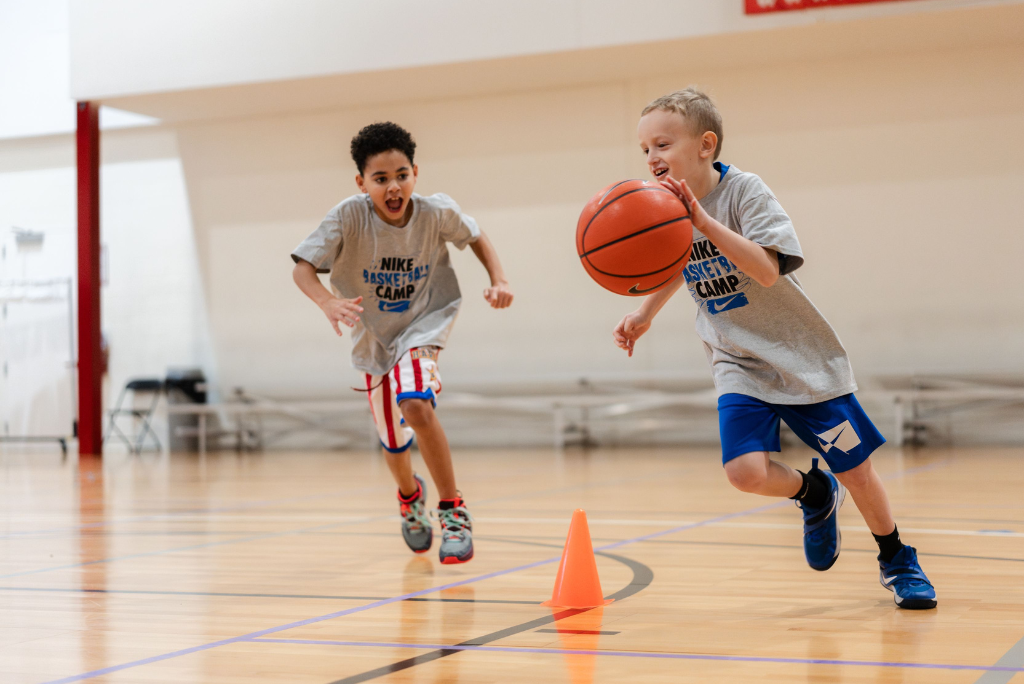
Most children are ready for their first sports camp experience between ages 5 and 7, depending on the sport, the camp format, and the child. Soccer camps, for example, commonly welcome athletes starting around ages 5 to 6, with programming built specifically for that age group. The more useful question for parents is rarely about a number on a birth certificate. It is about readiness: can your child spend a few hours in a group setting, follow simple instructions from a coach, and enjoy themselves doing it?
If the answer is yes, there is likely an age-appropriate camp format that fits. If the answer is not yet, waiting a season or a year costs nothing. Young athletes have long developmental runways, and no five-year-old's future in sport is decided by whether they attended camp at five or at seven.
What Age-Appropriate Actually Looks Like
A good camp for young children looks very different from a camp for teenagers, and that difference is what makes early camp experiences work. For athletes in the 5 to 7 range, quality programs are built around play: short activity blocks matched to short attention spans, games rather than drills wherever possible, lots of movement, frequent water and snack breaks, and coaches who measure success in smiles and effort rather than technique.
At US Sports Camps, multi-sport camps are designed specifically for younger campers, roughly ages 6 to 7, mixing a variety of sports with classic games like tag. The goal at that age is broad physical development, comfort in a group, and the discovery that being active is fun. Sport-specific skill building comes later, and it comes more easily for children who spent their earliest years simply enjoying movement.
This matches what youth development research recommends. The Aspen Institute's Project Play encourages sampling many activities in early childhood, and the American Academy of Pediatrics (aap.org) emphasizes free play and variety over structured single-sport training for young children.
Signs Your Child Is Ready for a First Camp
Readiness for a first camp shows up in everyday behavior, and most parents can read the signs without any expert help. Rather than a checklist to pass, think of these as directions to look:
Interest. Your child asks to play, kicks a ball around the yard, or lights up watching a sibling's game. Camp works best when the child wants to be there. A camp your child is excited about will beat a camp you had to sell them on.
Group comfort. They can manage a preschool or kindergarten classroom setting: taking turns, listening to an adult who is not their parent, and playing alongside other children.
Basic independence. They can handle bathroom trips, snack time, and transitions between activities with normal levels of adult support for their age.
Stamina for the format. A half-day camp asks for a few hours of activity and attention. If a full school day already goes well, a half-day camp is usually an easy step.
Notice what is missing from this list: athletic ability. First camps are for discovering sport rather than proving anything, and coaches who work with young athletes are experts at meeting children exactly where they are.
Starting Later Is Also Completely Fine
There is no such thing as being behind at age eight, ten, or twelve, and parents should be skeptical of any program that suggests otherwise. The idea that early specialization is required for athletic success is contradicted by the research. Studies of professional and Olympic athletes consistently find that most played multiple sports as children, and the American Academy of Pediatrics has cautioned against intense single-sport training at young ages because of injury and burnout risks.
A child who starts their first camp at ten brings advantages a five-year-old does not have: longer attention span, faster skill acquisition, and clearer preferences about which sports they actually enjoy. Camps group athletes by age and experience level precisely so that a new ten-year-old learns alongside appropriate peers. Every age has an on-ramp.
The real risk for young athletes is rarely starting too late. It is being pushed too hard too early, in environments that treat childhood sport like a career track. Camp, at its best, is the opposite of that: a low-pressure place to fall in love with playing.
How US Sports Camps Handles Young Athletes
Across its network of camps in more than 20 sports, US Sports Camps builds programming by age and stage rather than running one format for everyone. Multi-sport camps serve the youngest athletes, roughly ages 6 to 7, with play-based variety. Sport-specific day camps typically welcome athletes as they reach the developmental point where instruction becomes fun rather than frustrating, which for many sports is in the early elementary years; soccer programs, for example, commonly start around ages 5 to 6. Overnight camps serve older athletes who are ready to be away from home.
Coaches are selected based on experience, communication skills, teaching ability, and alignment with youth development best practices, and coaches who work with the youngest age groups know that their real job is making sure every athlete leaves camp wanting to come back. Growth and fun arrive together at that age or they do not arrive at all.
Visit ussportscamps.com to see age ranges for specific camps and sports.
Frequently Asked Questions
Is 5 too young for a sports camp?
For many children, no. Half-day, play-based formats in sports like soccer commonly start around ages 5 to 6. The determining factor is your child's comfort in group settings and their interest in playing, and a half-day format is the right first step at that age.
Should my young child do a single-sport camp or a multi-sport camp?
For athletes around 6 to 7, multi-sport camps are an excellent fit: they build general coordination and let your child discover what they enjoy. If your child is already passionate about one sport, an age-appropriate camp in that sport works well too. Youth development research supports keeping variety in the picture through childhood either way.
What if my child cries at drop-off or wants to leave?
Some first-time campers need a day to warm up, and experienced camp staff handle this routinely. Talk with the camp beforehand about how they support hesitant campers. Most children settle in quickly once the games begin, and finishing the week usually leaves them proud and eager to return.
When are children ready for overnight camps?
Most athletes are ready for overnight camp somewhere in the 9 to 12 range, though readiness varies by child. Successful sleepovers at friends' houses are the classic indicator. Day camps are the natural first step, and there is no rush to move past them.
It Starts Here
The right age for a first sports camp is the age when your child can enjoy one, and for most children that arrives earlier than parents expect: around 5 to 7 with the right format. Start with a camp built for their age, let fun lead, and the growth follows on its own schedule.
A lifetime of loving sport has to start somewhere. It starts here.
Find a Camp for Your Young Athlete
Sources: Aspen Institute Project Play (aspenprojectplay.org), American Academy of Pediatrics (aap.org), US Sports Camps (ussportscamps.com)