Baseball Tip
Can a Baseball Camp Sharpen Your Fundamentals?
Yes. A baseball camp sharpens your fundamentals by giving you something the season almost never does: days of focused, coached repetition on the core skills of hitting, fielding, throwing, and baserunning. Baseball is a sport of fundamentals stacked on fundamentals, and the athletes who advance are usually the ones whose basics are cleanest. The problem is that the season is a hard place to clean them up. Between games, team practice, and the pressure to perform, most players spend the spring using their current skills rather than rebuilding them.
Camp is where rebuilding happens. With no standings and no lineup card, a week of camp lets a player take apart a swing, rework a throwing motion, or learn proper footwork on a double play, and then groove the correction with enough repetitions to make it stick.
Hitting: Where Small Fixes Produce Big Results
Camp hitting instruction works because coaches can watch your swing closely, identify the one or two mechanical issues costing you hard contact, and drill the fix immediately. Hitting is the most technically sensitive skill in the sport. A slightly late load, a collapsing back side, or a head that drifts through contact can quietly cap a hitter's production for an entire season, and a busy team practice rarely has time to diagnose it.
At camp, hitters typically get station-based work covering the full swing: tee work for contact points and swing path, soft toss and front toss for timing, live hitting for game speed, and at many camps, video so hitters can see what their swing actually does. The correction cycle (see the flaw, feel the fix, repeat until natural) can run dozens of times a day. That pace of improvement is difficult to replicate anywhere else.
Defense: Footwork First, Glove Second
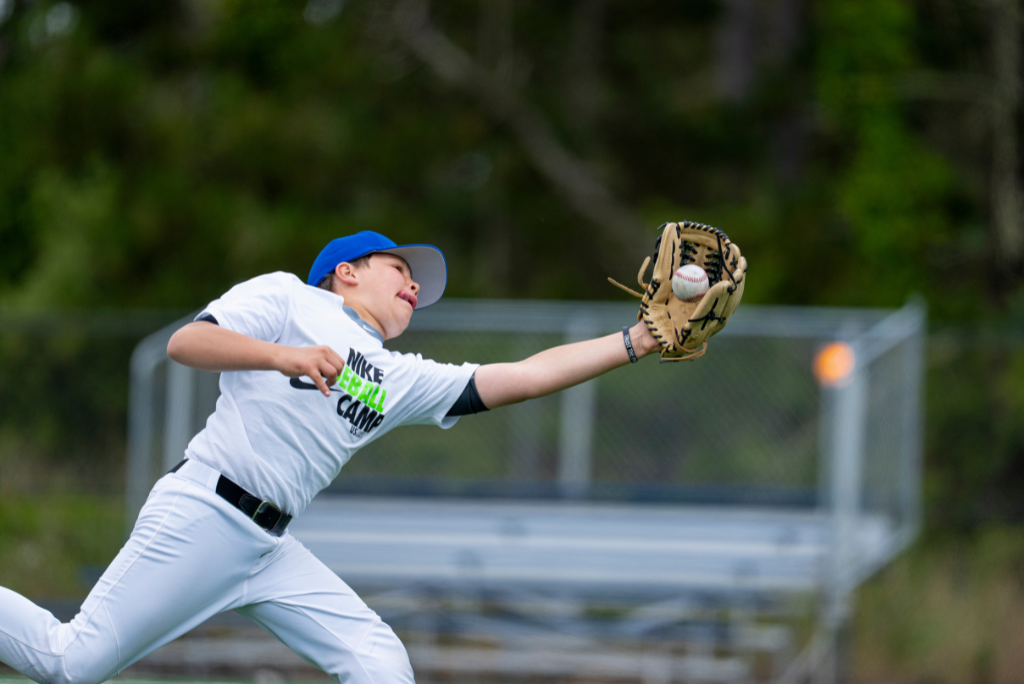
Great defense is built from the ground up, and camps teach it that way: positioning, first-step reads, footwork patterns, and then glove work layered on top. Most young infielders think fielding is about the hands. Experienced coaches know it starts earlier: pre-pitch preparation, reading the ball off the bat, and taking an efficient first step. Outfielders learn routes and drop steps. Catchers work receiving, blocking, and footwork to second. Infielders drill the rhythm of field, transfer, and throw until it becomes one motion.
Because many camps organize athletes into small groups by position and age, every player gets coached repetitions at their spot. A shortstop takes ground ball after ground ball with a coach adjusting their angle, glove presentation, and exchange. Multiply those repetitions across a week and the improvement shows up visibly by the final day.
Throwing: The Fundamental That Protects You
Camps sharpen throwing mechanics for accuracy and arm health, teaching proper sequencing that many young players have never been shown. Arm care matters in youth baseball. Overuse and poor mechanics contribute to arm injuries in young players, which is why organizations like USA Baseball and MLB publish the Pitch Smart guidelines for age-appropriate throwing. Good camps teach mechanics that hold up: lower-body sequencing, proper arm path, and follow-through, along with warm-up and recovery habits players can carry back to their teams.
For pitchers, camp instruction typically covers delivery mechanics, command, and pitch development appropriate to age. For every position, better throwing mechanics mean more accurate throws and a healthier arm across a long season.
Why Camp Repetition Beats Season Repetition
The advantage of camp is the ratio of coached repetitions to time: a week of camp can deliver more focused skill work than a month or more of in-season practice. Team practice during the season has to cover situational defense, signs, baserunning plays, and game prep for the whole roster. Individual skill development gets a fraction of the schedule. Camp inverts the ratio, and it removes the performance pressure that makes players protect their weaknesses during the season.
That pressure-free environment is worth more than most parents realize. On a competitive team, a player who is struggling at the plate may hesitate to overhaul their swing mid-season because at-bats are scarce and mistakes are costly. At camp, a player can fail freely while learning, which is the only way meaningful technical change happens. Athletes can experiment, miss, adjust, and improve without any consequence beyond getting better.
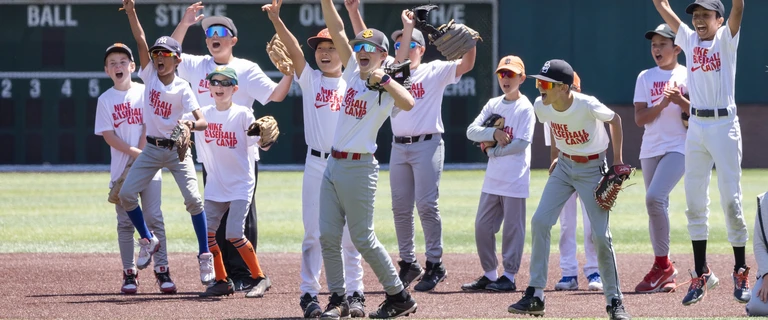
And camp is fun, which is a feature of the design rather than a bonus. Home run derbies, situational games, team competitions, and a week of baseball with new friends keep athletes energized through the hard work. Players leave camp better and more in love with the game, and both halves of that outcome matter.
Nike Baseball Camps, Provided by US Sports Camps
Nike Baseball Camps, provided by US Sports Camps, run day and overnight programs across the country for players of all experience levels. Coaches are selected based on experience, communication skills, teaching ability, and alignment with youth development best practices; staffs include current and former collegiate coaches and players. Programs typically organize athletes by age and skill level, with instruction covering hitting, fielding, throwing, pitching, catching, and baserunning, plus game play to apply the work.
Visit ussportscamps.com for current locations, dates, and pricing.
Frequently Asked Questions
What age is right for a first baseball camp?
Players commonly attend their first baseball camp in elementary school, once they are excited about the sport and comfortable in a group instruction setting. Beginner-friendly camps emphasize fundamentals and fun, and coaches are experienced at meeting young players at their level.
My player is on a competitive travel team. What does camp add?
Travel baseball provides games and competition; camp provides concentrated instruction. Travel schedules are heavy on playing and light on skill development, and roster pressure discourages experimentation. Camp is where a travel player can rebuild a swing or rework mechanics without competing for a lineup spot while doing it.
Will one week fix my player's swing?
One week can identify the issues, teach the corrections, and start the repetition process. Whether the fix holds depends on continued practice afterward. The most effective pattern is camp instruction followed by regular tee and toss work at home using the exact drills the camp coaches taught.
Do camps help players who want to make their school team?
Yes. Camps sharpen the fundamentals coaches evaluate at tryouts: clean fielding mechanics, accurate throws, quality at-bats, and baseball awareness. Just as valuable is the confidence a player builds from a week of visible improvement, which shows in how they carry themselves on a tryout field.
It Starts Here
Fundamentals are the foundation of every good baseball player, and a great camp is the best week of the year for building them: expert coaching, hundreds of repetitions, real improvement you can see, and a lot of fun along the way.
Sharper skills and a stronger love of the game start in the same place. It starts here.
Sources: USA Baseball (usabaseball.com), MLB Pitch Smart (mlb.com/pitch-smart), US Sports Camps (ussportscamps.com)