Tip
What Makes a Sports Camp Experience Memorable?
A sports camp becomes memorable when three things happen in the same week: an athlete visibly improves at something they care about, a coach makes them feel seen, and they have the kind of fun that turns strangers into friends. Ask adults about their childhood camp memories and this pattern repeats across decades. Almost nobody remembers the drills. They remember the coach who believed in them, the day the skill finally clicked, the friends from three states away, and the feeling of belonging to something for a week.
Understanding what makes camp unforgettable is useful for parents choosing between programs, because memorability is a signal of quality rather than a bonus feature. The experiences athletes remember for years are the ones that changed something in them, and camps produce those experiences by design or produce them rarely.
The Coach Who Saw You
The single most durable camp memory, reported again and again by former campers, is a coach who noticed them, knew their name, and believed in them before they believed in themselves. Young athletes spend most of their sports lives as one of many: one of a roster, one of a tryout group, one of a league. A great camp coach breaks that anonymity within a day or two, and the effect on a young athlete is hard to overstate.
What those coaches do is observable. They learn names fast and use them. They give feedback specific enough to prove they were watching ("your first step got quicker every day this week"). They find something real to build on in every athlete, including the ones who are struggling. And they hold both halves of the coaching job at once: demanding real effort while making the work feel like play.
Athletes carry those coaches around for decades. A large share of the adults who coach youth sports today, at every level, describe a camp coach or a childhood coach as the reason they do it.
The Breakthrough Moment
Nothing cements a camp week in memory like a visible breakthrough: the skill that would not come, and then came. Camp is engineered to produce these moments at a higher rate than regular season play, because breakthrough requires exactly what camp concentrates: repetition volume, immediate coaching, and the freedom to fail repeatedly on the way to succeeding.
The moments themselves are small from the outside. A first serve that finally lands consistently. A flip turn that suddenly works. A dodge that beats a defender clean for the first time. From inside the athlete, they are enormous, and they arrive with witnesses: a coach who saw the whole struggle and a group of peers who cheered the payoff. Progress that is witnessed lands differently from progress that happens alone, and camp provides the witnesses.
The confidence from a breakthrough outlives the week. Athletes who have experienced the full loop (cannot do it, work at it, can do it) know something about themselves that transfers to the next hard skill, the next tryout, and plenty of things that are not sport.
The Friendships and the Belonging
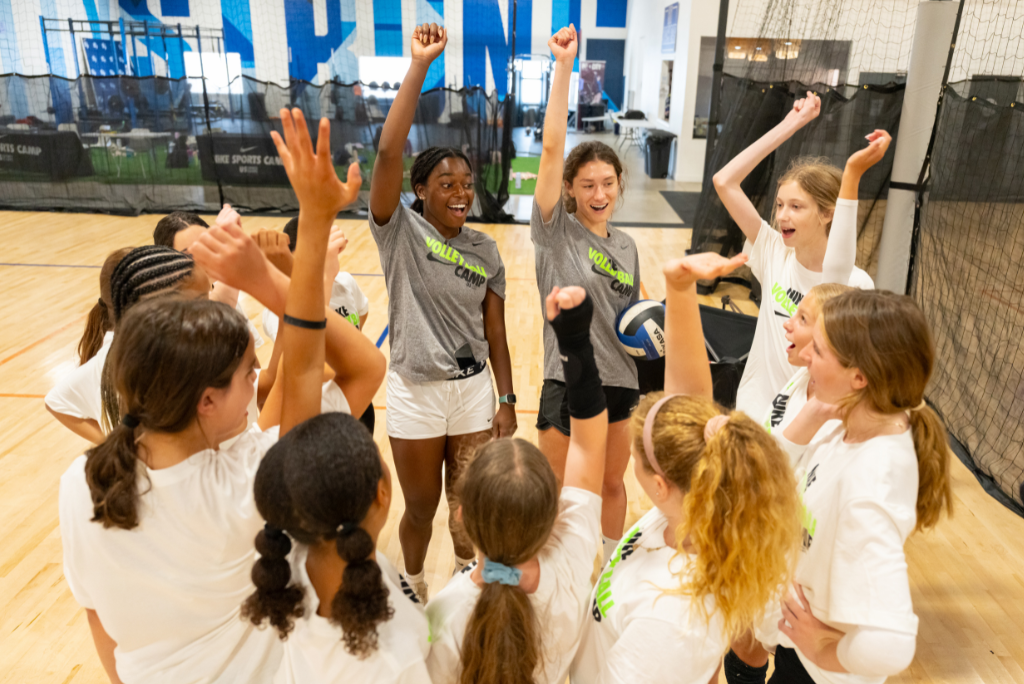
Camp compresses friendship formation the way it compresses skill development: a week of shared effort, shared meals, and shared victories bonds athletes faster than a season of practices. Athletes at camp are surrounded by peers who chose to spend a week of summer getting better at the same sport they love, which is a filter for friendship that regular life rarely provides. Add the natural intensity of the week (competing together, struggling together, winning and losing together) and the connections form fast.
For overnight campers, the belonging runs deeper still: the cabin conversations, the dining hall tables, the evening activities that have nothing to do with sport. Many athletes return to the same camp summer after summer as much for the reunion as for the training, and camp friendships that persist across years and state lines are common enough to be a defining feature of the experience.
Belonging is also the quiet engine of everything else camp does. Athletes who feel like they belong take more risks, engage harder with coaching, and enjoy the week more, which loops back into better development. The fun and the growth are the same system.
The Rituals and the World of Camp
Memorable camps feel like a place with its own life: traditions, competitions, inside jokes by Wednesday, and a rhythm that belongs to camp alone. The tournament bracket that runs all week. The counselor game everyone talks about at dinner. The final-day awards that celebrate effort and character alongside skill. These rituals sound minor, and they are the texture that memory holds onto.
There is a reason the best camps invest in this layer of the experience. Rituals turn a week of instruction into a story athletes tell afterward, and the story is what gets retold at school, remembered in winter, and requested again next summer. A camp that is all instruction produces improvement; a camp that is instruction inside a world produces improvement that athletes cannot wait to repeat.
What This Means for Choosing a Camp
Parents evaluating camps can treat memorability as a quality signal and look for its ingredients directly. How does the camp talk about its coaches, and do athletes get consistent coaching from the same faces all week? Is the schedule built for breakthroughs, with real skill development rather than glorified babysitting? Do evenings and downtime have life in them, especially at overnight camps? Do athletes come back year after year? Returning campers are the most honest review a camp can have.
US Sports Camps has been building unforgettable weeks since 1975: real development and genuine fun, delivered by coaches selected for experience, teaching ability, and the kind of presence athletes remember. Across more than 20 sports, the goal every week is the same one this article describes: athletes who leave better, more confident, and already asking to come back.
Visit ussportscamps.com to find a camp your athlete will still be talking about in December.
Frequently Asked Questions
What do young athletes actually remember most from sports camp?
The people and the moments: a coach who believed in them, a skill that finally clicked, and the friends they made. Skill improvement is real and lasting, and it is usually the emotional experiences around the improvement that athletes describe years later.
How do I know if a camp will be memorable before signing up?
Look for the ingredients: experienced coaches who stay with athletes through the week, a schedule with real development and real fun, traditions and evening life (for overnight camps), and a high rate of returning campers. Asking a camp "what do athletes say they remember" is a fair question, and good camps have vivid answers.
Is a memorable camp the same as an effective camp?
They overlap heavily. The things that make camp stick in memory (breakthroughs, great coaching, belonging) are the same things that drive development. A camp that athletes remember fondly is usually a camp that changed their game, and athletes who loved the week practice more afterward.
My athlete is introverted. Can camp still be a great experience?
Yes. Camps are full of quieter athletes, and shared activity is one of the easiest ways for introverted athletes to connect, because the sport provides the structure that open-ended social settings lack. Coaches experienced with young athletes make room for every temperament, and plenty of introverted campers leave with the same deep friendships and the same request to return.
It Starts Here
A memorable sports camp is a week where growth, belonging, and joy happen to the same athlete at the same time. Those weeks change how young athletes see their sport and themselves, and they are the weeks athletes ask to repeat every summer after.
The week they will never forget starts here.
Sources: Aspen Institute Project Play (aspenprojectplay.org), US Sports Camps (ussportscamps.com)